



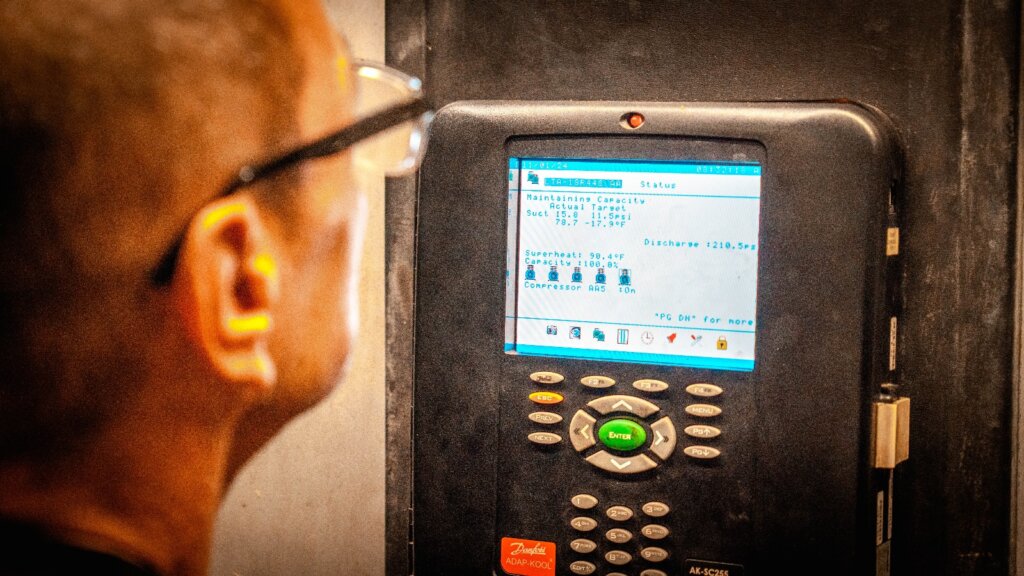
In a highly competitive and regulated retail market like Florida, energy management in supermarkets has become a strategic priority. It not only helps reduce operating costs but also improves sustainability, ensures food preservation, and strengthens the reputation of companies committed to efficiency and environmental responsibility.
As temperatures rise and electricity prices continue to increase, supermarkets that adopt smart energy optimization solutions are achieving clear economic and competitive advantages over those that do not.
How to Implement Energy Management in Supermarkets.
1. Significant Reduction in Operating Costs
Energy is one of the highest expenses for any supermarket. According to the U.S. Energy Information Administration (EIA), refrigeration, air conditioning, and lighting systems can account for up to 70% of total electricity consumption in such facilities.
An effective energy management strategy allows operators to:
- Detect inefficiencies and energy leaks.
- Adjust HVAC and refrigeration systems based on real-time demand.
- Implement LED lighting and motion sensors.
- Schedule smart energy use to lower utility bills.
In supermarkets across South Florida—where refrigeration is critical all year long—these improvements can result in energy savings of 20% to 40% without affecting product quality or customer comfort.
2. Greater Sustainability and Corporate Reputation
More and more consumers value sustainability practices. Adopting an efficient energy management system reinforces a supermarket’s environmental commitment and strengthens its image among customers, authorities, and business partners.
Supermarkets in Miami and Tampa, for instance, are already incorporating solar photovoltaic systems and natural refrigerants to reduce their carbon footprint. These actions, in line with Florida’s energy policies, help build a responsible and modern brand identity that appeals to today’s consumers.
Additionally, programs like Energy Star for Commercial Buildings and Florida Power & Light’s (FPL) incentive initiatives make it easier for businesses to access rebates and financing for implementing energy-efficient technologies.
3. Improved Control and Safety in Daily Operations
Energy management is not only about saving money — it’s also about control and operational safety.
Maintaining the proper temperature and humidity levels is essential for preserving food quality and ensuring food safety. With intelligent energy systems, managers can:
- Monitor refrigeration and display units in real time.
- Receive alerts about temperature fluctuations or abnormal energy consumption.
- Prevent equipment failures before they cause product loss or downtime.
This proactive approach helps supermarkets avoid costly product spoilage and ensure seamless operation even during peak demand periods.
4. Digitalization and Smart Monitoring
Digital technology has revolutionized the way supermarkets manage energy.
Companies like Dynamiq Automation Solutions, based in Florida, develop real-time monitoring and automation systems that integrate refrigeration, HVAC, lighting, and electrical control into a single intelligent platform.
With these solutions, managers can:
- Analyze energy consumption by area or equipment.
- Identify energy waste patterns.
- Schedule preventive maintenance.
- Receive automated performance reports.
These systems not only improve efficiency but also enable data-driven decision-making, reducing human error and optimizing operations continuously.
5. Regulatory Compliance and Access to Incentives
Florida has a strong regulatory framework promoting energy efficiency and emission reduction, along with multiple incentive programs for businesses that adopt sustainable practices.
For example:
- The Florida Building Code includes strict energy efficiency requirements for HVAC and electrical systems.
- FPL’s Business Energy Manager Program provides tools for real-time monitoring and identifying energy-saving opportunities.
- Businesses implementing efficiency upgrades may qualify for tax incentives and grants at the state or federal level.
By complying with these regulations, supermarkets can avoid penalties while gaining eligibility for financial benefits and sustainability certifications.
6. Positive Impact on Customers and Employees
Comfortable temperatures, balanced lighting, and a pleasant store atmosphere directly influence the customer experience.
Effective energy management ensures:
- Stable indoor temperatures.
- Proper lighting that enhances product visibility.
- Reduced noise and vibration from HVAC systems.
Employees also benefit from a safer, more comfortable workspace, which leads to higher productivity and well-being.
In Florida’s extreme climate, maintaining thermal stability is essential not only for customer satisfaction but also for product preservation.
7. Steps to Implement an Effective Energy Management Plan
Building a successful energy management strategy requires a structured and gradual approach:
| Step | Main Action | Objective |
|---|---|---|
| 1. Energy Audit | Evaluate current consumption, identify losses, and set performance indicators. | Detect areas for improvement. |
| 2. Digitalization | Install sensors, meters, and monitoring software. | Access real-time data. |
| 3. Equipment Optimization | Upgrade lighting, HVAC systems, and refrigeration insulation. | Reduce consumption and improve efficiency. |
| 4. Preventive Maintenance | Schedule regular inspections. | Avoid costly breakdowns. |
| 5. Staff Training | Educate employees on efficiency practices. | Foster an energy-conscious culture. |
Each stage contributes to creating an intelligent, flexible, and future-ready energy management system.
Conclusion: Efficiency that Drives Growth
Energy management in supermarkets in Florida is not a passing trend — it’s a necessity.
With high year-round temperatures and growing environmental awareness, supermarkets must evolve to become more efficient, sustainable, and competitive.
Implementing an integrated energy management system that combines automation, real-time monitoring, and best operational practices allows supermarkets to reduce costs, prevent losses, improve customer experience, and meet regulatory standards.
At Dynamiq Automation Solutions, we help supermarkets across Florida achieve these goals through smart energy monitoring, refrigeration automation, and technical support.
Our approach combines technology, expertise, and personalized service to deliver measurable results from day one.