



In the dynamic and competitive food retail sector in Florida, where ambient temperatures are high and electrical demand is constant, the refrigeration and HVAC system is not just equipment; it is the financial heart of your supermarket. A failure in a dairy display case or a freezer unit not only represents a costly product loss but also irreparable damage to customer trust.
Therefore, the transition from a reactive preventive maintenance in supermarket model («fix it when it breaks») to supermarket refrigeration preventive maintenance is a strategic decision, not an expense.
This essential guide is designed for retail managers, owners, and operations staff looking to optimize performance, reduce energy costs, and ensure the uninterrupted freshness of their products.
The Risks of Indifference: Why Prevent and Not Regret?
Florida’s high humidity and constant heat magnify the risks if maintenance is neglected.
- Inventory Loss: The most immediate risk is the thawing or spoilage of thousands of dollars worth of perishable goods (meats, seafood, dairy, produce).
- Skyrocketing Energy Costs: A system struggling to maintain temperature due to dirty condensers or refrigerant leaks can consume up to 30% more energy.
- Catastrophic Failures: Lack of lubrication or undetected corrosion can lead to the total breakdown of a compressor, the replacement of which can paralyze an entire department for days.
Supermarket Refrigeration Preventive Maintenance is the shield that protects your bottom line.
The ideal Supermarket Refrigeration Preventive Maintenance program must be comprehensive and scheduled with a minimum quarterly frequency, and even monthly in critical areas or high ambient temperature zones like Florida.
1. Thorough Cleaning of Condensers and Evaporators
Dirt, dust, and grease are the main enemies of efficiency.
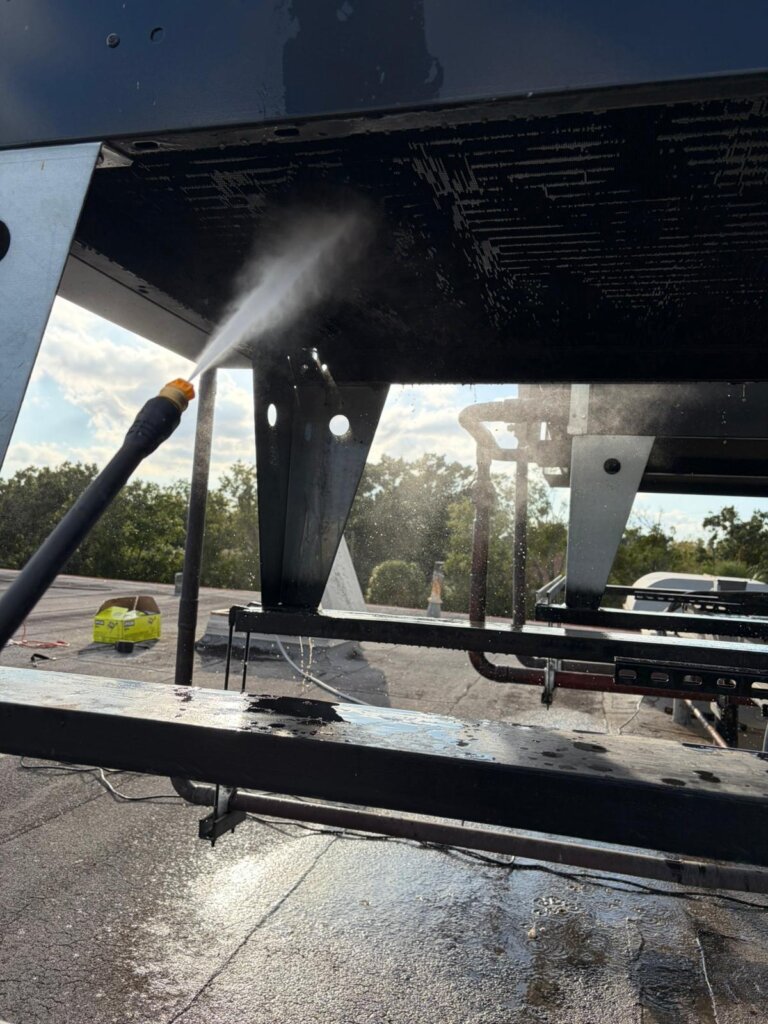
- Key Point: The fins of the condensers, typically located on the roof or in machine rooms, must be completely free of obstructions to dissipate heat effectively. A dirty condenser causes the compressor to work longer and at higher pressure, shortening its lifespan.
- Action: Cleaning with low-pressure water and specific chemicals. In the evaporators (inside the display cases), cleaning the drain pans is vital to prevent mold and bacterial growth.
2. Active Detection of Refrigerant Leaks
Even a small leak compromises efficiency and is harmful to the environment.
- Key Point: Refrigerant is the system’s lifeblood. A low level does not mean it «gets used up,» but that a leak exists. Continuing to operate with a low charge is the fastest path to compressor overload.
- Action: Use high-sensitivity electronic leak detectors and, if necessary, the application of ultraviolet dyes to locate and repair the leak before recharging the system.
3. Electrical and Wiring Inspection
Voltage spikes are common in Florida. The electrical system is the cause of many costly failures.
- Key Point: Verification of voltage, amperage, and the resistance of components (motors, contactors, relays, starters) prevents overheating and motor burnouts.
- Action: Check and tighten all electrical connections. Measure phase balance and the functioning of protection devices.
4. Calibration and Operation of Temperature Controls
The accuracy of thermostats and sensors is fundamental for food safety.
- Key Point: Customers expect constant temperature. Incorrect calibration can result in inefficient cooling cycles or, worse, in the loss of the cold chain.
- Action: Calibrate thermostats and thermometers, and verify that automatic defrost cycles run correctly and for the appropriate duration, minimizing thermal fluctuation.
5. Review of Mechanical Components (Compressors and Fans)
Components with moving parts require attention to avoid friction and wear.
- Key Point: Proper lubrication and checking the condition of belts and bearings in the condenser and evaporator fans significantly prolongs equipment lifespan.
- Action: Lubrication of motors (if applicable), and checking the compressor’s sound and vibration to detect imminent failures (knocking, abnormal noises).
6. Maintenance of Doors and Seals (Closed Units)
Refrigeration is useless if cold air escapes.
- Key Point: In cold rooms and display cases with doors, magnetic seals and hinges are critical leak points that force the system to run continuously.
- Action: Check the condition of all weatherstripping and gaskets. Ensure proper door closure and the functionality of frame heaters (in freezers) to prevent ice buildup.
7. Climate Control (HVAC) of the Sales Area
The supermarket’s air conditioning directly affects the thermal load on the display cases.
- Key Point: A deficient air conditioning (HVAC) system in the sales area increases ambient temperature and humidity, forcing the product refrigeration to work twice as hard, increasing consumption.
- Action: Inspect and clean the local air conditioning filters, ensuring optimal comfort levels for customers and reducing the workload of the refrigeration units.
Conclusion: Investing in Foresight is Saving in the Future
Implementing a robust Supermarket Refrigeration Preventive Maintenance plan in Florida is the smartest and most profitable decision an retail manager can make.
It not only ensures the safety and quality of your products but also offers a clear Return on Investment (ROI) through:
- Drastic reduction in energy costs.
- Prolongation of the lifespan of extremely expensive assets (compressors, refrigeration racks).
- Minimization of emergency failures and costly service calls.
If your supermarket in Florida still operates under a reactive model, it’s time to make the leap to preventive maintenance. Guarantee the efficiency of your operation and the satisfaction of your customers in the most demanding environment.